
This week we have a guest issue by Yong Feng, a member of SG Climate Rally and part of the organising team for the Maju For The People rally.
Maju for the people? A former HDB planner’s thoughts
By Yong Feng
When I first joined the Housing Development Board (HDB) as a planner straight out of architectural school, my first masterplanning project was the Keppel Golf Club site, which is now undergoing earthworks for the upcoming Berlayer estate. At that time I thought this was nothing objectionable: public housing near the city centre is surely better than a private golf course. However, going through the Environmental Impact Assessment (EIA) process and hearing from nature group representatives made me aware of how a golf course, in many ways, is still more hospitable to wildlife than a housing development can ever hope to be.
In response to their feedback, our revised concept plan included wider green corridors to accommodate migratory birds flying from the Southern Ridges through Gillman forest. I spent nights redrawing building layouts to demonstrate that we could increase the size of the park or reduce building heights to minimise bird collisions, while still achieving the required number of flats. Sometimes, I wondered if it would be better to build everything to the maximum height and exceed the target. Could this remove the need to develop another site? But there was no platform for answers to such questions: each planner was meant to focus on their assigned HDB towns, while coordination of land use plans across the country was the role of Urban Redevelopment Authority (URA) and Ministry of National Development (MND).
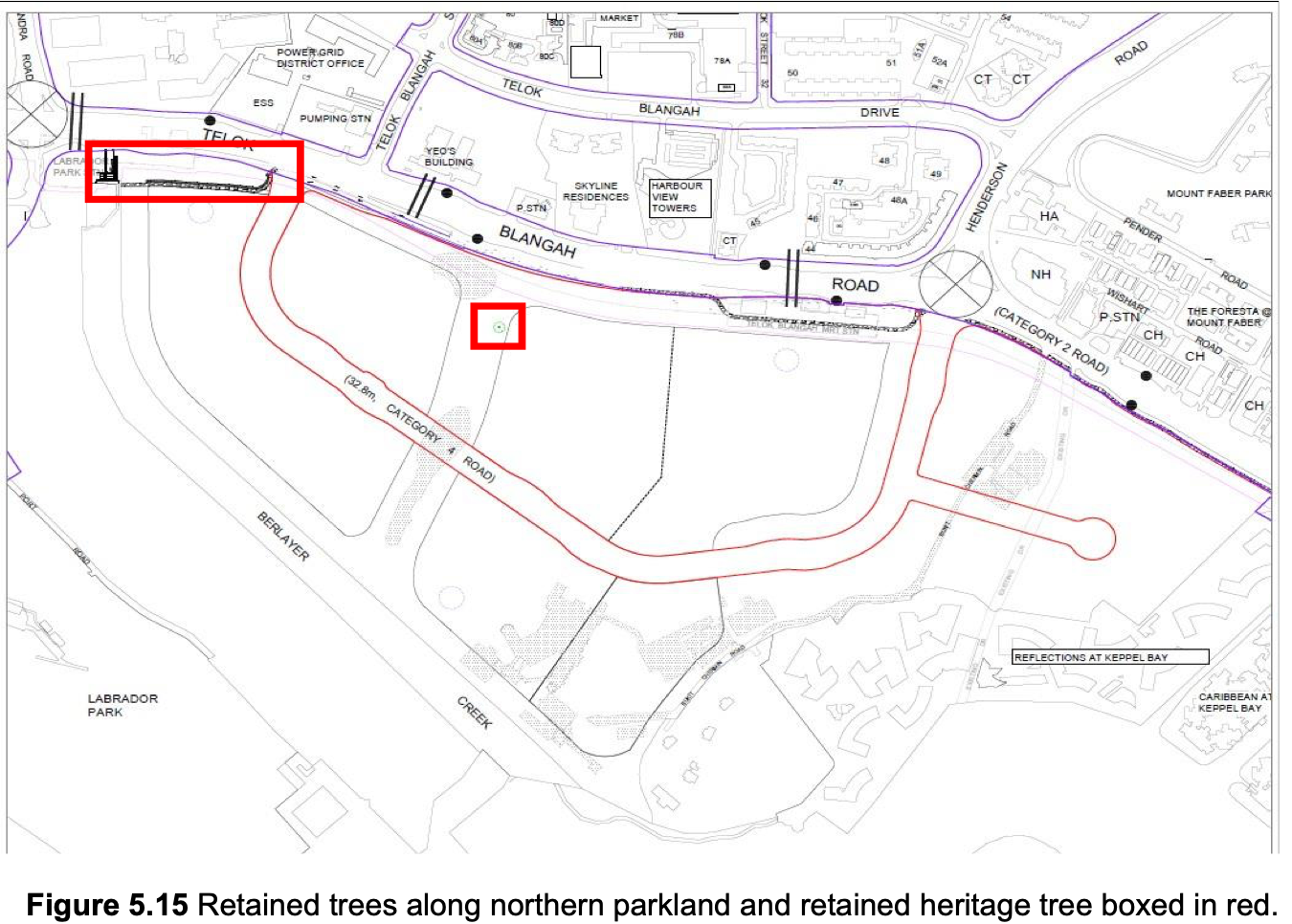
I learnt how challenging it is to build while retaining trees: the tall hills of the site had to be flattened and its low-lying areas raised to make it feasible to build on and protect it from sea level rise, meaning that even within the planned corridors, almost all the existing trees had to go, as seen from the Environmental Management and Monitoring Plan below. As we finalised the development plans, I felt uneasy but convinced myself that we had made the most of the many constraints.
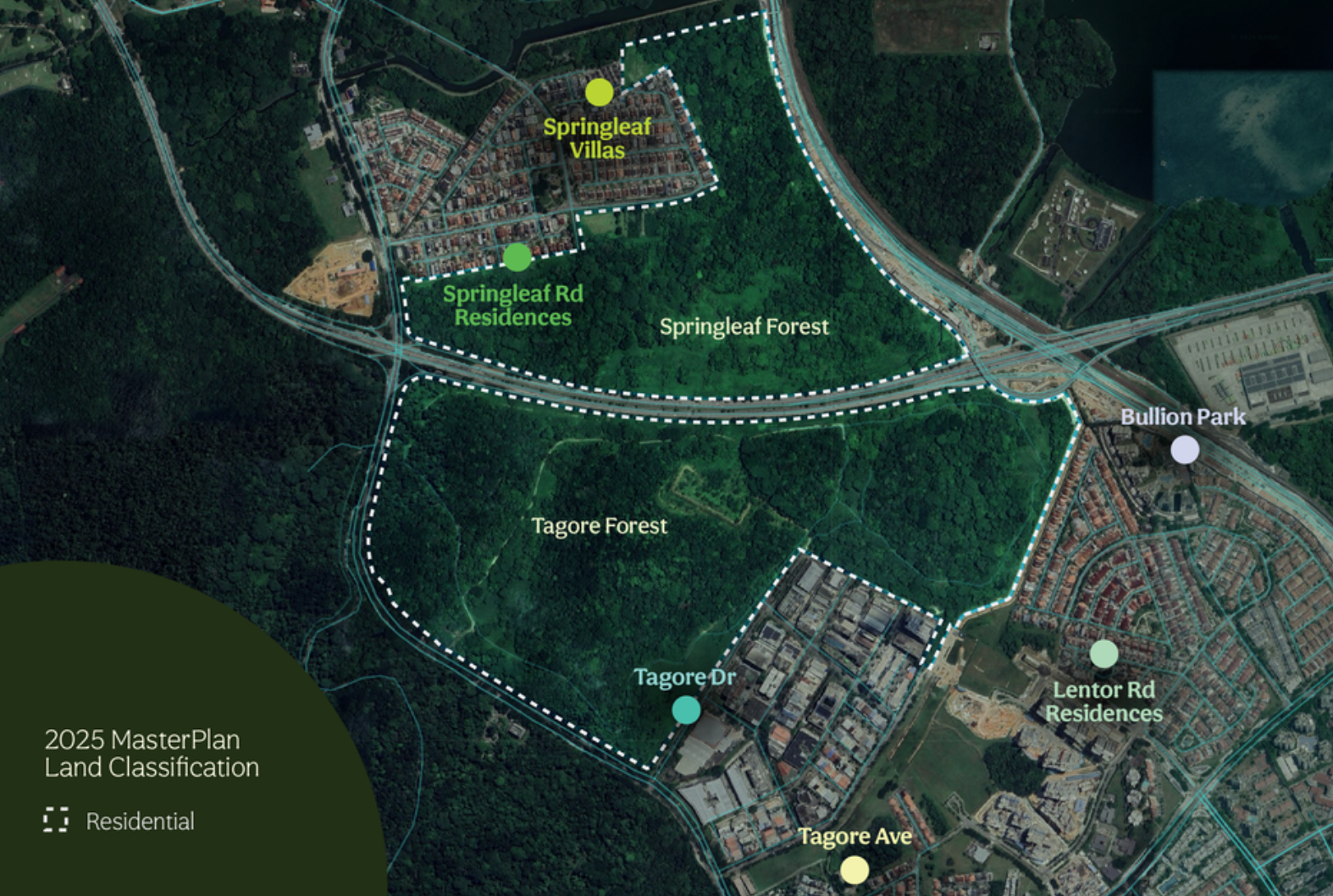
This time, with Gillman, it is a forest that is to be cleared: one that may be seen as “waste land” or “just” secondary growth by members of the establishment, but also portrayed as full of life in Robert Zhao’s Venice Biennale exhibition that subverts this technocratic vision. What government planners see, though, are URA’s Master Plan zonings and plot ratios used to estimate if housing yields can meet each year’s targets. A plot coloured in “Residential” orange means it is ready for the taking, no matter what lies beneath the neat lines and flat shading. As Joanne Leow writes in her book, Counter-Cartographies: Reading Singapore Otherwise, “it is by making Singapore legible that the state has been able to refashion it and control its spaces and population”. The land has all been cut up and allocated, each parcel ready to realise its highest economic potential and all trade-offs accounted for—who could possibly disagree with this grand plan? (Not that planners are given the full rationale and figures behind the housing targets.)
Thus, it is only now—after a petition with thousands of signatures, angry letters, questions fired at a feedback session, a community dialogue, and many other ground-up activities organised by residents—that the government is pushed to defend itself with ministerial statements, social media posts, and artificially chirpy videos. It says that its plans for Gillman were announced at the Draft Master Plan 2025 Exhibition, yet it doesn’t seem like there were genuine intentions to engage the public on it then. In a sprawling exhibition of more than 50 panels, Gillman Barracks was only indicated with a small dot on a display about new homes in the Central Region. One might have reasonably assumed that the development would be replacing the historic military buildings, not the forest next to it.
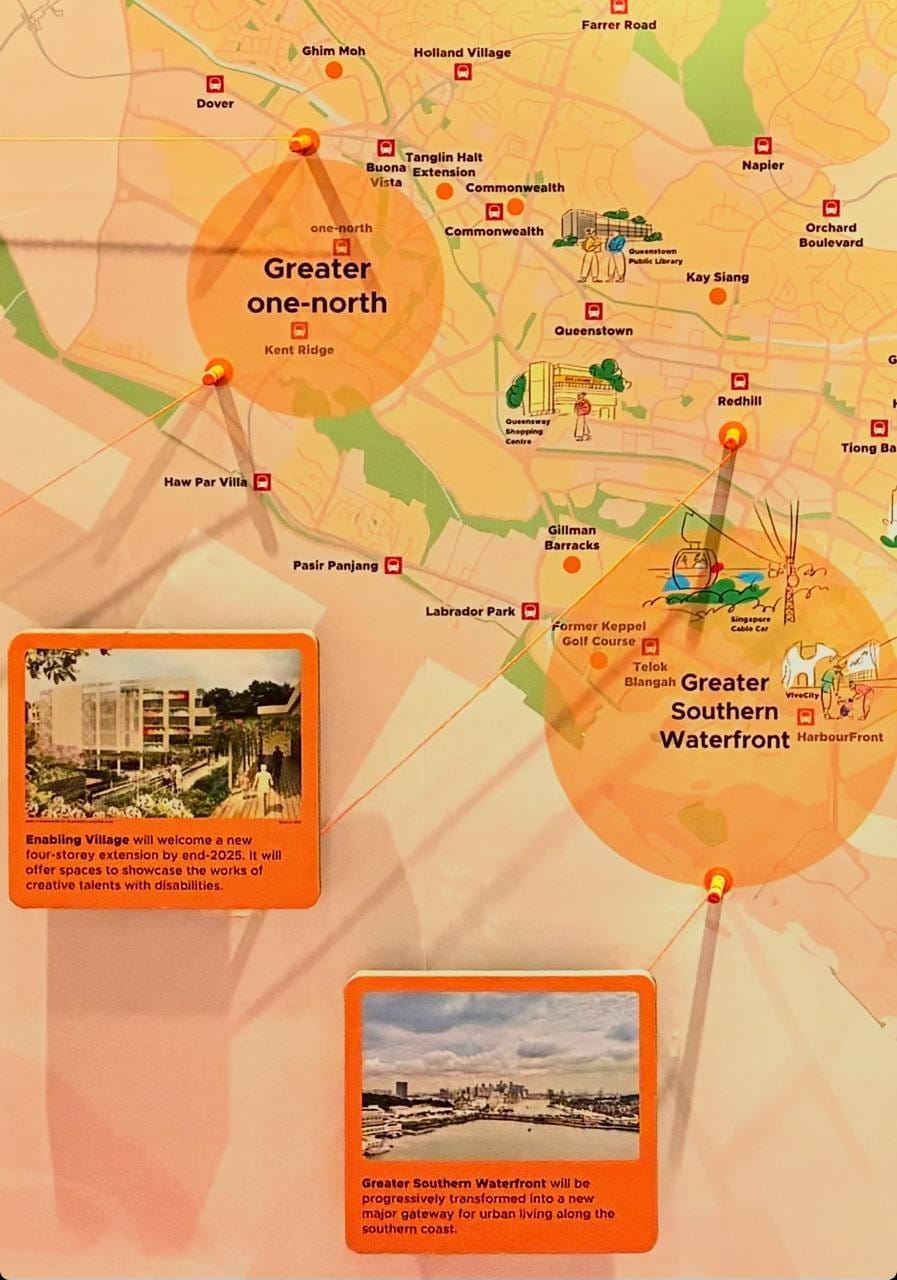
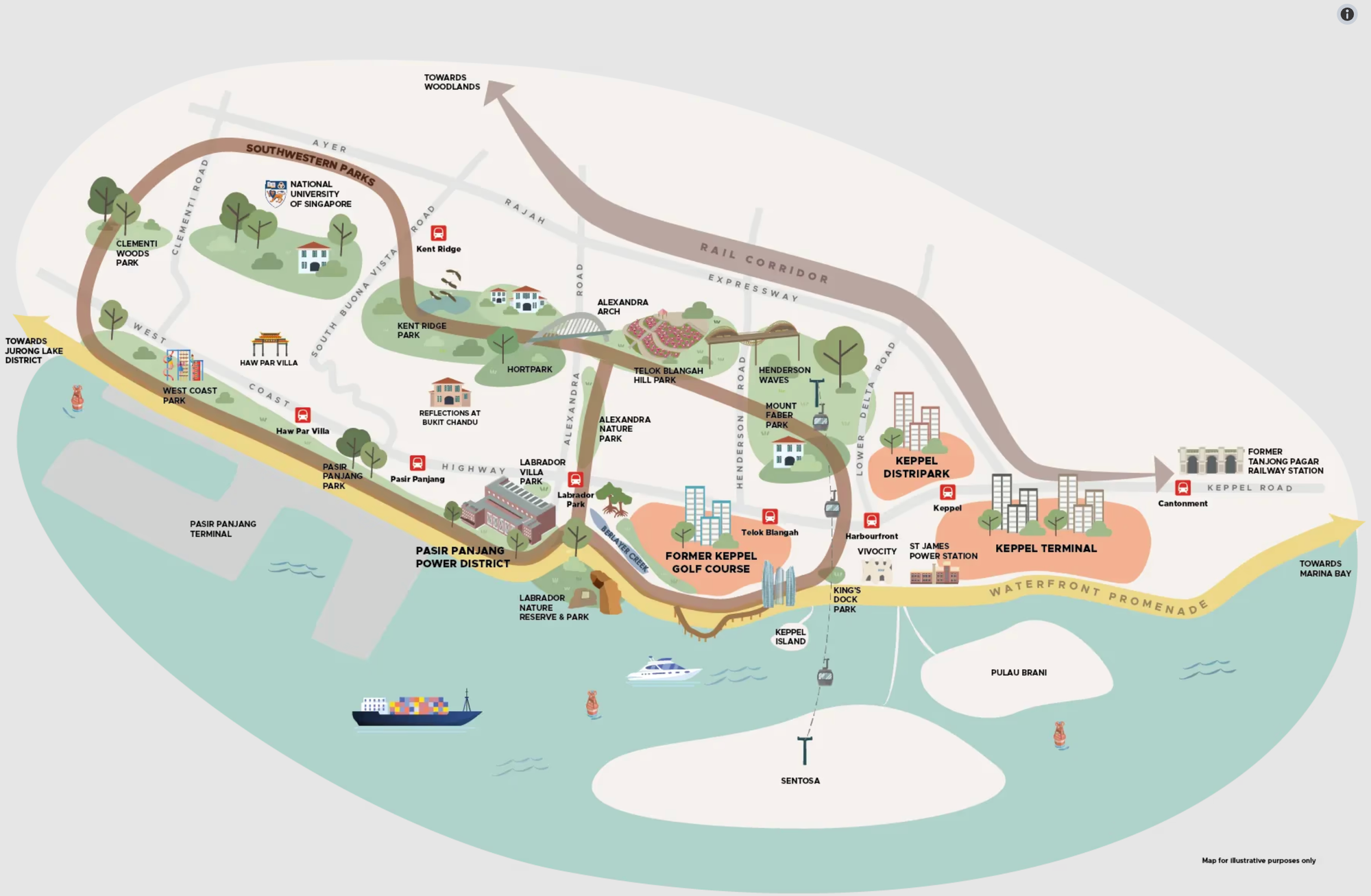
Perhaps the state assumed that it could overwhelm the public with information and slip these proposals past us. But different groups of residents and nature lovers have stepped up to defend the spaces they hold dear—from Maju Forest to Serangoon River Forest and East Coast Park—as well as challenge the false dichotomy of “nature or development”. There have also been no clear answers to why alternatives like redeveloping older estates are not viable, though perhaps HDB is afraid that affected residents will find the compensation inadequate as they have before.
As a resident from Sunset Way I spoke to asked, why are hundreds of colonial black-and-white bungalows inhabited by a privileged few allowed to remain standing in the name of “heritage”, when forests that bring immense benefits to the thousands that live near them and beyond not are recognised as part of our heritage, too? Surely, if all the health benefits and other ecosystem services that forests provide us with are properly accounted for, this would not be a pragmatic calculus. The answer, as Leow astutely observes, is that “in selectively choosing which old buildings were to be preserved and which were to be demolished, Singapore’s planners have inscribed in the city skyline a history that privileges official power over that of community-based life".
Through all of the community efforts carried out over the past month, there is a desire to reclaim some of this agency, to decide for ourselves what we want to value and keep by drawing a different kind of plan. Environmental groups LepakInSG and Singapore Youth Voices for Biodiversity recently released Our Wild Spaces 2.0, a report showing how many important forested areas like Tagore-Springleaf and Ulu Sembawang have already been zoned for other uses in the Master Plan, a preview of more disappointment to come. Similarly, SG Climate Rally organised a series of countermapping workshops last year, and this Sunday’s rally will include a participatory artwork that documents what we have lost across the island.
The EIA framework today is a method of containment, where expertise is used to defuse discontent. As recently as a decade ago, HDB could clear forests for housing without any fuss. It was only after much criticism of its plans for Tengah that the current process took shape: an EIA report is commissioned, a filtered list of approved nature groups is invited to closed-door sessions, plans are slightly adjusted to placate them, and a thick technical report is released to the public for a month-long feedback window, after which the plan is assumed to have passed public scrutiny. Throughout this entire timeline, there are no real opportunities for open deliberation and frank discussion of alternatives where anyone can join.
Today, many have come to see that any limited gains from participating in this system and giving it tacit approval are not worth the consequences of losing hectares of precious forest year after year: forests containing complex ecosystems that cannot be simply replaced with planted trees. That is why we call on you to join the Maju For The People rally this Sunday, 3.30–6.30pm, at Hong Lim Park.
Our ministers can choose to ignore sympathetic planners advocating within the system, but not when thousands speak up against its plans. It cannot stop at this rally, either. We must continue organising for Gillman, Maju, and all the other forests yet to be annexed for development: to press for an open and truly democratic process to decide on the future of all these lands that rightfully belong to we, the people.
Thank you for reading! Feel free to forward this to friends and family—and make it down to Hong Lim Park this weekend if you can!