
Altering States is a secondary newsletter that I run within We, The Citizens, focused on drugs and drug policy. It'll always be free. When you subscribe, you can choose either We, The Citizens or Altering States, or, better still, both!
All Mary Jane Veloso wanted was a job.
A single mother whose family had struggled to make ends meet all her life, Mary Jane made the decision her mother and sisters had before her: to leave home and become a migrant domestic worker abroad. Many Filipino women have trod this path for decades: according to the Philippine Statistics Authority, as of 2024, more than 68% of the 1.25 million female Filipino overseas workers were “engaged in elementary occupations” such as domestic or cleaning work.
Mary Jane worked in the Middle East for a while, but her contract became untenable after her employer tried to sexually assault her. Back in the Philippines, a god-sister told her about an opportunity in Malaysia, only for her to discover upon arrival in Kuala Lumpur that no such job existed. Instead, she was informed that a similar position had been secured for her in Indonesia, and her god-sister even helpfully provided her with a suitcase to carry her things.
When Mary Jane landed in Yogyakarta on 25 April 2010, the Indonesian authorities found 2.6kg of heroin in the lining of the suitcase. She was arrested and interrogated in Indonesian, a language she did not speak. She was put on trial in October that year—with an inexperienced state-appointed lawyer and inadequate language support—then convicted and sentenced to death.
If Mary Jane’s story sounds like blatant exploitation and injustice to you, that’s because it is. Yet the rough outlines of her case are more common than people realise.
According to the Global Prison Trends 2025 report produced by Penal Reform International and the Thailand Institute of Justice, the number of women in prisons across the world has gone up by 54% between 2000 and 2024. (According to the Institute for Crime & Justice Policy Research in February 2025, this works out to about 733,000 women and girls incarcerated globally.) In multiple countries—like Guatemala, Brazil, Cambodia, and Indonesia—this is driven by the incredibly punitive drug laws that politicians like to insist is the solution to keeping people safe, even as the global illicit drug trade continues to grow. A 2000–2013 study of Thai imprisonment trends found that a high proportion of the female penal population had been convicted of drug offences—72.1%–89.5% of the women in prison in Thailand were there for drug offences, compared to 45.4%–65.4% of the men.
What about Singapore?
There are far fewer women in prison in Singapore than men: in 2024, there were 377 women in the convicted penal population (compared to 4,071 men), 545 women in Drug Rehabilitation Centres (4,349 men), and 112 women in remand (1,238 men). The Singapore Prison Service’s annual report doesn’t provide enough of a breakdown to see how many of these women are being punished for drug offences, but given that drug offences are by far the largest offence category in Singapore's prison system (about 46% of the convicted penal population), I think it’s fairly safe to assume that a significant number of women are in prison for drug offences.
The number of women incarcerated for drug offences worldwide isn’t a reflection of women’s power or position within drug syndicates. Most people convicted and punished for drug offences aren’t powerful cartel bosses at all; for both men and women, there are far more couriers, mules, small-time dealers, and users languishing behind bars than there are kingpins who inspire Netflix dramas.
Research indicates that women are commonly pushed or pulled into the drug trade because of poverty and the need to provide for their families. “Low levels of education resulted in limited employment prospects, and these women chose to traffic drugs to provide financially for themselves, their children and extended family members,” researchers observed in an article on gendered pathways to prison in Thailand. Women, the same researchers found, have been “manipulated, coerced or misled” into cross-border drug trafficking by romantic partners (or people they thought of as their romantic partners). Women’s drug use was also often “accelerated within intimate relationships with men”, whereas the wives or girlfriends of men who use drugs were more likely to try to get them to curb their use.
Overall, from both the current study and past research we can conclude that women’s and men’s [international cross border drug trafficking, or ICBDT] experiences differ in terms of their relationships to poverty, familial caretaking, intimate relationships, victimisation and trauma. Most of the women in this research were propelled into prison for ICBDT because they needed to economically support their families and/or because they fell in love with troublesome men... Importantly, neither the women nor the men in this research were ‘big time’ drug traffickers with connections to organised criminal networks.
— Samantha Jeffries, Prarthana Rao, Chontit Chuenurah, and Michelle Fitz-Gerald in ‘Extending borders of knowledge: gendered pathways to prison in Thailand for international cross border drug trafficking’
Then there are women, like Mary Jane, who are prime targets for drug syndicates. The vulnerability of migrant workers like her—the lack of social capital, the desperate need for employment, the shortage of options—make it difficult to question or refuse those purporting to provide jobs or income. Once in conflict with the law, migrant workers are often also disadvantaged in terms of their ability to access adequate legal counsel or, given language barriers, even understand the investigation and legal processes they’re put through.
In April 2015, Mary Jane came dangerously close to execution by firing squad. Her alleged recruiters were in police custody back in the Philippines, prompting urgent calls for her execution to be put on hold, on the grounds that her testimony could be key to their prosecution. She was granted a reprieve about an hour before the scheduled execution.
Close to a decade later, in December 2024, Mary Jane was repatriated after bilateral negotiations between the Philippines and Indonesia. She is now in a country where she hasn’t been convicted of any crime—yet she's still behind bars, the expected clemency from President Ferdinand Marcos Jr having not materialised. Efforts to push for her release are ongoing.
Last week, the Anti-Death Penalty Asia Network (ADPAN), in partnership with the Coalition Against the Death Penalty (CADP) in the Philippines, published a new episode the Voices Beyond Verdicts podcast focused on Mary Jane’s story. It features a conversation with Yuni Asriyanti of the National Commission on Violence Against Women (Komnas Perempuan) in Indonesia and Edre Olalia of the National Union of Peoples' Lawyers (NUPL) in the Philippines, Mary Jane's lawyer. Please give it a listen, and share it widely:
 PodBean Development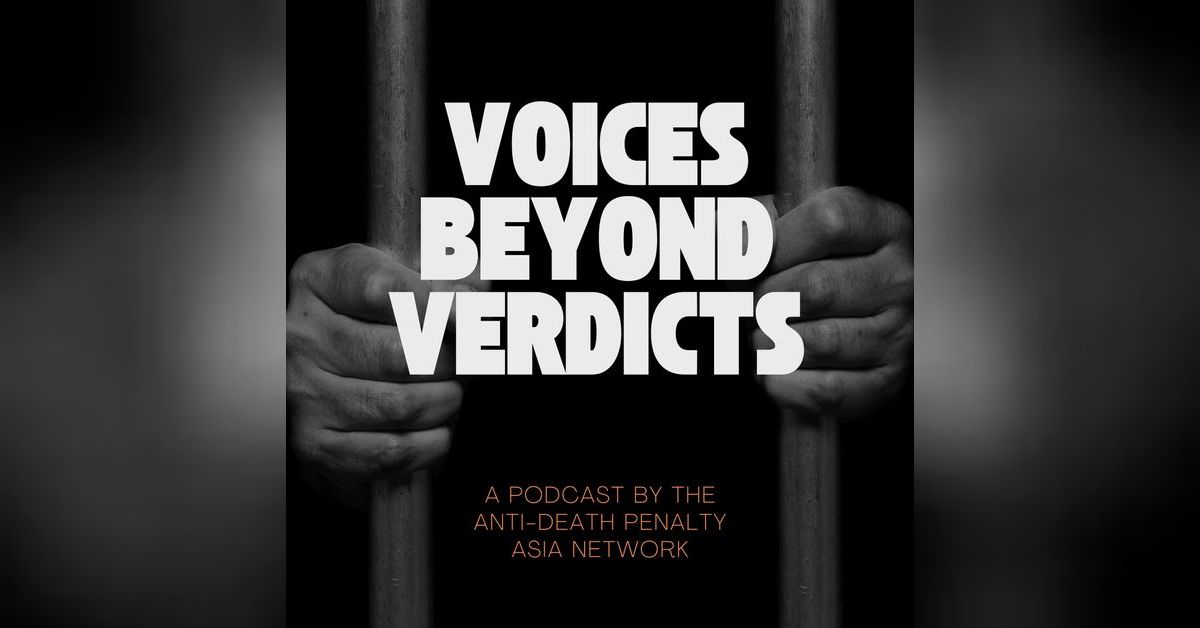
This podcast is also available on Spotify, Apple Podcasts, and YouTube.
The reality is that harsh drug policies hurt women in multiple aspects of their lives. On 29 April, I participated in a hybrid side event at the Women Deliver conference in Melbourne, with opening remarks from Helen Clark, the former New Zealand prime minister and the current chair of the Global Commission on Drug Policy. The session was focused on women and the war on drugs, with a spotlight on the use of the death penalty as the most extreme form of punishment.
The woman on death row is, in most cases, not a powerful actor at the heart of an organised crime network. In most cases, the woman will be the most expendable person in the network, recruited because her vulnerability makes her useful, prosecuted because her low-level role makes her visible and catchable, sentenced to death under... frameworks that make her circumstances legally irrelevant. So we see this lethal punishment of death penalty being handed down to the most marginalised people in the drug supply chain, leaving the most powerful, so often, untouched. Using the machinery of criminal law to complete what poverty, trafficking, patriarchy, a range of factors have already begun, which is the destruction of women’s lives. This is, of course, not justice; it is systemic failure and it has fatal consequences where the death penalty is implemented.
— Helen Clark, Chair of the Global Commission on Drug Policy
Speakers highlighted the gendered effect of punitive drug policies. Women who use drugs essentially face violence from all sides: from intimate partners and abusive domestic situations, from law enforcement officers and prosecutors who see them as little more than ‘addicts’ and ‘criminals’, from prison settings where they're treated as dehumanised inmates and separated from their children. Despite (and even because of) this, there are few avenues women who use drugs can turn to for help. “We’re excluded from domestic violence services because we use drugs or we don’t seek help because we’re afraid of what will happen if we do,” said Ele Morrison of the Australian Injecting and Illicit Drug Users League (AIVL), a peer-led organisation advocating for the well-being and human rights of people who use drugs. “The systems that are meant to protect us are often the ones that are perpetrating the violence.”
Criminalisation… discourages women and girls from accessing essential services including pain management, treatment for substance use disorders, reproductive health services, or other essential care. Women who use drugs, particularly mothers and pregnant women… because of the stigma and discrimination, often avoid health services due to fear of arrest or child removal. Custody decisions are frequently driven by stigma rather than evidence of harm or neglect.
— Dr Adeeba Kamarulzaman, infectious diseases expert and health advocate
The damage isn’t confined to individual women; it ripples out across families, households, communities. It deeply affects the children of women who have been criminalised, demonised, and punished by ‘zero tolerance’ policies, ensuring that the harm persists across generations.
In learning and reflecting on drug policy, I've had to repeatedly unlearn the narratives and assumptions that have been deeply impressed upon me throughout my Singaporean upbringing. For so many years—including my earlier years in the anti-death penalty movement—I thought about drugs almost entirely as a criminal issue, because that’s the only lens we're told to look through when it comes to this issue in this country. Opening myself to learning about people’s experiences and choices without rushing to judge has revealed just how dangerously myopic that view is.
Politicians, government officials, and law enforcement agencies tell us that their war on drugs is about catching the 'bad guys' and making them pay for what they’ve done, to scare off other (potential) 'bad guys' for our collective benefit. Yet the brunt of this wrath is borne by the most marginalised and vulnerable among us, perpetuating injustice, oppression, and violence at the intersections of class, race/ethnicity, gender, and more.
The women’s movement has not, unfortunately, been immune to the prohibition propaganda machine which tends to function, actually, as a smokescreen to conceal structural oppression. Women who use drugs are still cast in stereotypes as 'bad women', you know—irresponsible, immoral, lacking control, lacking credibility. And this is striking because the women’s movement has spent decades challenging exactly those kinds of judgements, challenging the idea that women must be pure or self-sacrificing, controlled, in order to be worthy of rights.
— Ruth Birgin, Women and Harm Reduction International Network (WHRIN)
I’ve presented some pretty grim and depressing information about how women are harmed by punitive drug policies in this newsletter. But women have never just been victims.
“We don’t just survive these systems, we change them,” Ele Morrison declared at the Women Deliver side event. “Women who use drugs have always been at the forefront of advocacy for the health and human rights of people who use drugs.” The rest of the feminist movement—those who, like Ruth Birgin observed, have bought into prohibitionist narratives—have a lot of catching up to do.
Thank you for reading! As mentioned above, Altering States will always be free to access, so please share this with anyone who you think might be interested. If you’d like to support my work, please consider subscribing to We, The Citizens or leaving a tip!