
Altering States is a secondary newsletter that I run within We, The Citizens, focused on drugs and drug policy. It'll always be free. When you subscribe, you can choose either We, The Citizens or Altering States, or, better still, both!
Regulation is complex, but necessary
The Central Narcotics Bureau published its 2025 Annual Statistics Report earlier this month. This is where they provide information on the arrests and seizures they’ve made during the past calendar year, breaking the data down by age, drug type, gender, race, whether people were first-timers or not. This is often contextualised with paragraphs on the horrors of drugs, highlighting the problems substances have caused in other countries. The latest report includes this paragraph about cannabis:
…as of December 2024, Canada, Uruguay and 28 jurisdictions in the United States have enacted legal provisions, either through legislative measures or by popular ballot, allowing the cultivation, production and sale of cannabis for non-medical use. Available data from jurisdictions that have legalised the non-medical use of cannabis show an accelerated harmful pattern of cannabis use in the years following the change in policy, especially among young adults. Hospitalisations related to cannabis use disorders, and the proportion of people with psychiatric disorders, suicidal ideation and attempted suicide associated with regular cannabis use, have also increased in Canada and the United States, especially among young adults.
A day before the CNB published this report, The New York Times published an editorial about cannabis in the US (paywalled). The editorial board reiterated their support for the legalisation of cannabis, but acknowledged they, and many other legalisation advocates, had been wrong on some points. Legalisation has led to an increase in the use of cannabis in the US, and there have been negative consequences. Millions of people in the US suffer from cannabinoid hyperemesis syndrome and many have been hospitalised for physical and mental conditions linked to cannabis use.
This is the sort of thing that the Singapore government loves to quote to justify our harsh, prohibitionist approach, and to dismiss activists arguing against the death penalty and the war on drugs as “narco liberals” who want our tiny country to be awash with harmful substances. But, as The New York Times’s editorial board points out, “there is a lot of space between heavy-handed criminal prohibition and hands-off commercial legalization”.
In Singapore, the drug policy debate is presented as a simple binary: we either crack down hard and show no mercy, or we open the floodgates and let ourselves be swept away. It prompts us to rush into picking a team, so that you either support the death penalty, mandatory drug detentions, arrests, and surveillance, or you’re perceived as being overly permissive without acknowledging the dangers that people might face. The result is a lack of genuine public education—as opposed to moral panic-inducing government propaganda campaigns—and space to engage in nuanced and thoughtful conversations about drugs, health, and how we want to treat one another in society.
This is not “better safe than sorry”
The thing about the false binary that we get presented with in Singapore is that there is a wrong answer, but it’s not the one that everyone thinks it is. When I talk to people about the urgent need to end the war on drugs, I often hear hesitation and fear. Can we really afford to ease up on Singapore’s ‘zero tolerance’ policy? What if we stop fighting the drug war and everything gets worse? Maybe this seems harsh, but surely it’s better to be safe than sorry?
The problem with this is that “better safe than sorry” only applies when there’s no actual downside to taking that step. "Better safe than sorry" is locking the padlock on the gate after you’ve already locked your front door before going on a week-long holiday. Adding that extra padlock doesn’t cause any harm, so why not have that little extra layer of security?
The war on drugs is not like that. It’s not something that we fall back on with no cost because we’re too afraid to try something different. There is a cost. A huge one, in so many ways.
The Ministry of Home Affairs states in the revenue and expenditure estimates for the financial year of 2026 that the total budget for Singapore’s drug enforcement programme is $264,176,900. The total budget for the “offender management and rehabilitation programme”, which covers prisons and mandatory drug detention centres, is a $856,439,700. That’s a huge amount spent on policing, surveillance, incarceration, and punishment. And that’s just the money. Our current approach also inflicts stress and trauma on people who use drugs and their loved ones, disrupting lives, damaging relationships, cutting them off from the support and opportunities they really need. No amount of Yellow Ribbon Project will erase the fact that we’re the ones who created the stigma in the first place. Criminalisation and punishment also leaves all of us more unsafe in a variety of ways: people who use drugs are more at risk of obtaining tainted or unsafe supplies from unregulated, black market sources; access to healthcare is hampered by the threat of being reported to law enforcement; there’s a lack of evidence-based public education on drug use and harm reduction measures; and the underground nature of the drug trade means that it’s much harder to gather reliable and comprehensive data that'll give us a clear idea of what we’re really dealing with.
There's no “better safe than sorry” when the path we’re on exacts such a devastating price for no reward.
 Kirsten Han
The tricky art of regulation
When activists argue for an end to the war on drugs, we’re not calling for a free-for-all where all sorts of drugs are openly, cheaply, and easily accessible to all and sundry. Instead, it’s about turning away from punishment and pain—which have already been proven to not work—and looking towards approaches that minimise harm and maximise well-being as much as we can, for as many people as possible. As experts have pointed out, it’s more an art than an exact science. There’s no one-size-fits-all approach, so each polity will have to understand their context and figure out what combination of decriminalisation, legalisation, regulation, taxation, and service provision works best for them.
Regulation is important, and we know it. We all understand how crucial it is that there are standards for all sorts of things, from food to medicines to cosmetics. These regulations give us peace of mind when we’re at the supermarket, because we can read the labels on packaging and know what we’re getting. They keep us safe in pubs and bars and clubs where we can order drinks knowing that the liquor is what it says it is on the bottle, and not some random moonshine some dude made in his bathtub. Even when they can’t keep people completely safe, regulations try to minimise harm: think of the age restrictions on buying cigarettes, or rules governing how alcohol can be advertised or sold.
It’s reasonable to have some rules and controls in place, but they need to be carefully calibrated. If not, they might end up counter-productive. Here’s one example: black market tobacco is going absolutely gangbusters in Australia, with organised crime syndicates cashing in and escalating into violence as they compete for turf. This is being driven by eye-wateringly high taxes on cigarettes, making Australia the most expensive country in the world to get a pack of smokes. The idea had been that making cigarettes super-duper expensive would get Australians to stop smoking, but now they have become so expensive that people who already smoke—and can’t or don’t want to quit—have turned to black market suppliers. Criminal syndicates have rushed in to meet this demand, pushing the price of bootleg cigs down as they compete with one another—which then has the effect of making (this time, unlicensed and unregulated) cigarettes available to people in Australia. I think it’s safe to say that the situation has not turned out as the authorities intended.
 Calum Stuart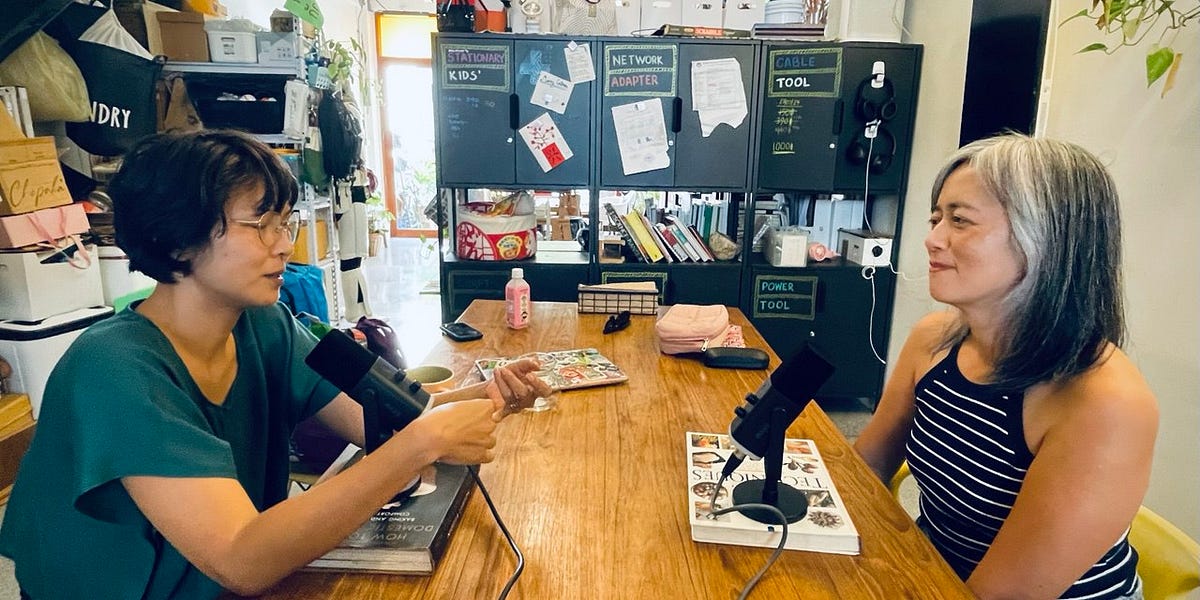
 Calum Stuart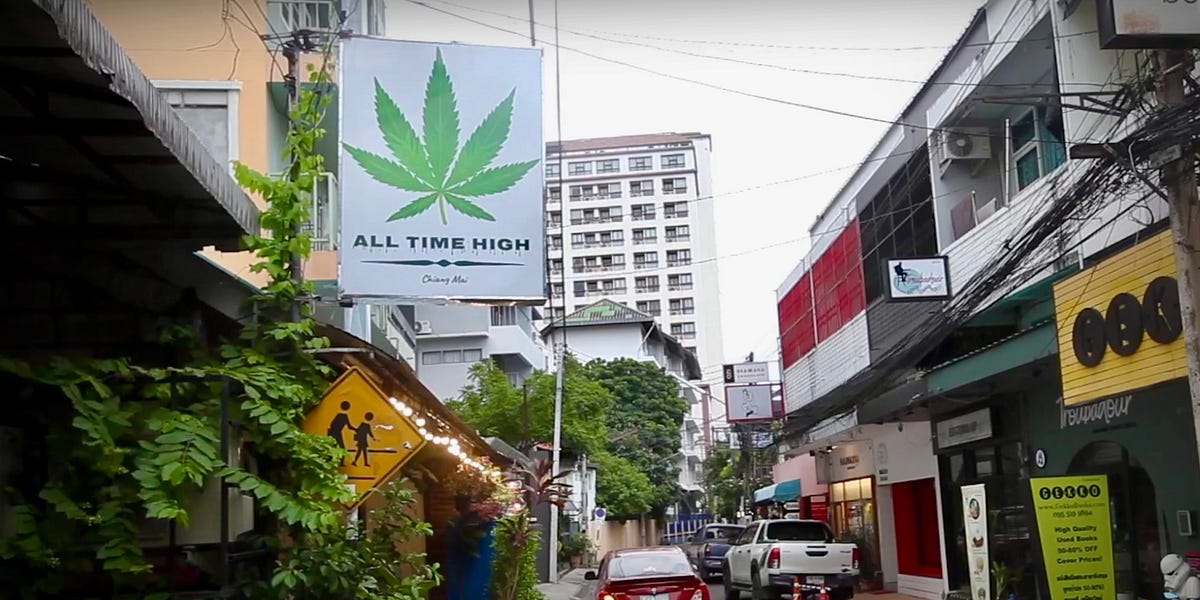
A two-part podcast from March 2025 discussing cannabis policy in Thailand.
Figuring out the best way forward takes a lot of work, thought, and intention. It requires a lot of study, a lot of empathy, a lot of listening to people about why they’ve made the choices they’ve made and what’s necessary to meet their health and care needs. It requires regular monitoring and adaptability, a willingness to make adjustments and changes as situations evolve, and to empower communities to participate in the process of achieving good public health outcomes. This is not what Singapore is doing now; with five executions for drug-related offences within the first two months of 2026 alone, we’re doing the exact opposite.
Thank you for reading! As mentioned above, Altering States will always be free to access, so please share this with anyone who you think might be interested. If you’d like to support my work, please consider subscribing to We, The Citizens or leaving a tip!