
There was no wrap last weekend for two reasons: (1) I wanted to wait until the launch of a new report was done so I could write about it, and (2) I was completely snowed under over the weekend helping out with editing and formatting said new report. But it's out now, so here I am with a special issue of the newsletter!
Activism under authoritarian control
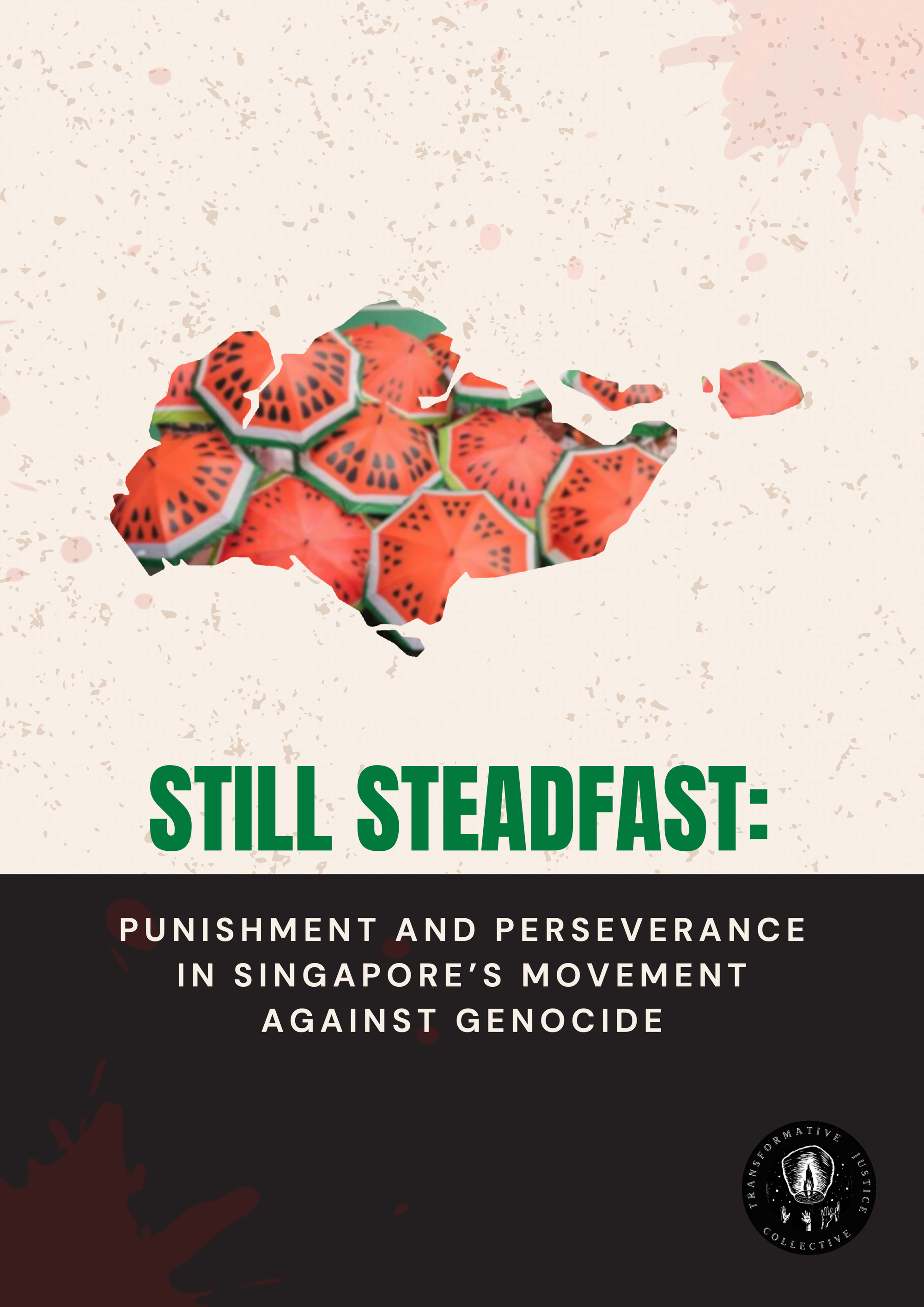
On Monday night, the Transformative Justice Collective launched Still Steadfast: Punishment and Perseverance in Singapore's Movement Against Genocide, a new 75-page (including the appendix) report on Singapore's pro-Palestine movement and how it has persisted both despite and in spite of a hostile authoritarian environment that's been particularly keen to keep a lid on pro-Palestine activism.
Full disclosure
As mentioned at the top, I helped with the editing and formatting of this report. But I wasn't involved in the data-gathering, interviewing, or writing at all—that all comes down to a very dedicated team of volunteers who put in a lot of work over months to pull everything together!
There were, of course, many people in Singapore who have felt strongly about Palestine long before Hamas's surprise attack in October 2023, and Israel's retaliatory, furious bombardment of Gaza, which a UN Commission described in September 2025 as genocide. But, over the past couple of years, pro-Palestine activism and organising is taking place in Singapore on a completely different scale, becoming more visible and sustained than ever before. Lots of watermelon energy. 🍉🍉🍉
This development is not one the PAP government welcomes. Firstly, they don't like civil resistance and direct action, full-stop. They only like the sort of 'activism'—or better yet, 'volunteerism'—that operates on their terms, slotting in neatly with the implementation of their policies, feeding into their "Many Helping Hands" approach. The pro-Palestine movement is most certainly not that.
Secondly, Singapore is in a long-term "special relationship" with Israel. When Singapore was a baby sovereign state, it was Israel that stepped in to help develop a masterplan for the Singapore Armed Forces. A book was published in 2019 to commemorate 50 years of official diplomatic ties; it's titled Beating The Odds Together: 50 Years of Singapore–Israel Ties. We cooperate and collaborate on lots of things; even today there's a Singapore–Israel Industrial R&D Programme, where Singaporean and Israeli companies can pair up and submit applications; if successful, the Singapore company can get state support for "up to 66% of project costs". Israeli defence companies and arms manufacturers hawked their wares at the last Singapore Airshow, and will be doing so again this week. The PAP does not want to hear repeated demands from Singaporeans for the government to cut ties and end the Singapore–Israel arms trade.
I'm not sure to what extent the government genuinely believes this, and how much is a useful narrative hyped up to justify clampdown and control, but solidarity with Palestine is also often made out to be a threat to Singapore's social fabric. The authorities tend to see things through the lens of race and religion, justifying their policing and suppression of direct action as protecting Singapore from dubious actors exploiting the issue to drive wedges between different racial and religious groups in the country. This is the reason the Singapore Police Force and the National Parks Board gave in October 2023 when they announced that nobody was going to get a permit to organise any public event related to Israel or Palestine, not even at Hong Lim Park:
The peace and harmony between different races and religions in Singapore should not be taken for granted, and we must not let events happening externally affect the internal situation within Singapore. Given the sensitivity of the topic and the volatility of the situation overseas, there is a real risk that such events could give rise to public disorder. As such, applications to hold such events will be turned down.
[...]
The Police take a serious view of acts which could potentially harm the racial and religious harmony in Singapore. Any person who makes remarks or acts in a manner which potentially causes ill-will and hostility between different races or religious groups in Singapore will be dealt with swiftly and in accordance with the law.
Still, there has been plenty of activity. There have been social media posts and film screenings and joint letter deliveries and posters stuck around university campuses and staged memorials and cultural events and kite-flying gatherings and picnics and teach-ins and protests and even limited hunger strikes spread over a few weekends. Chapter 3 of Still Steadfast is a chronological, narrative timeline of Palestine-related developments—both positive and negative—in Singapore since 2023; it's more than 20 pages long, and still there were things that had to be left out so it didn't go on and on and on.
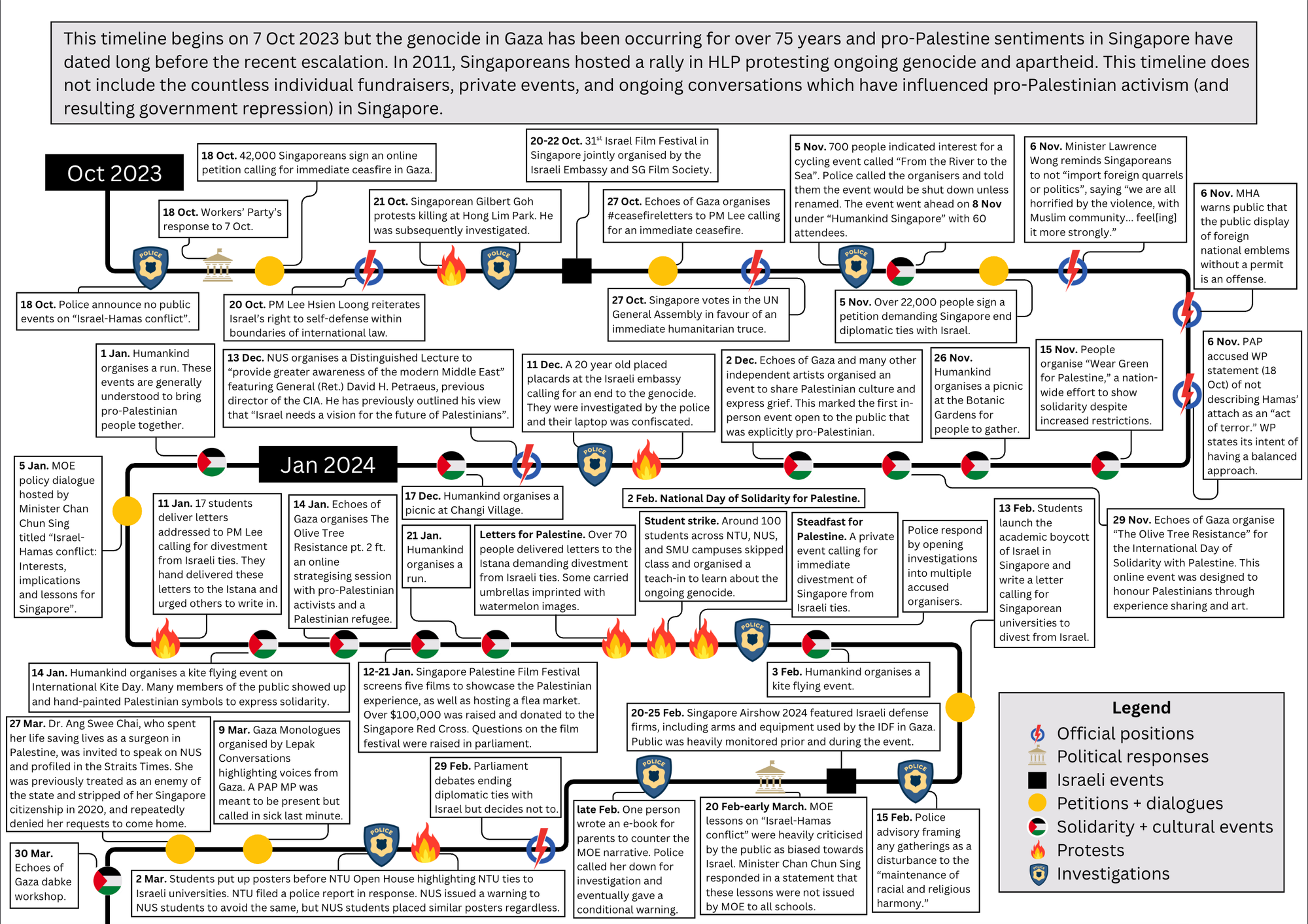
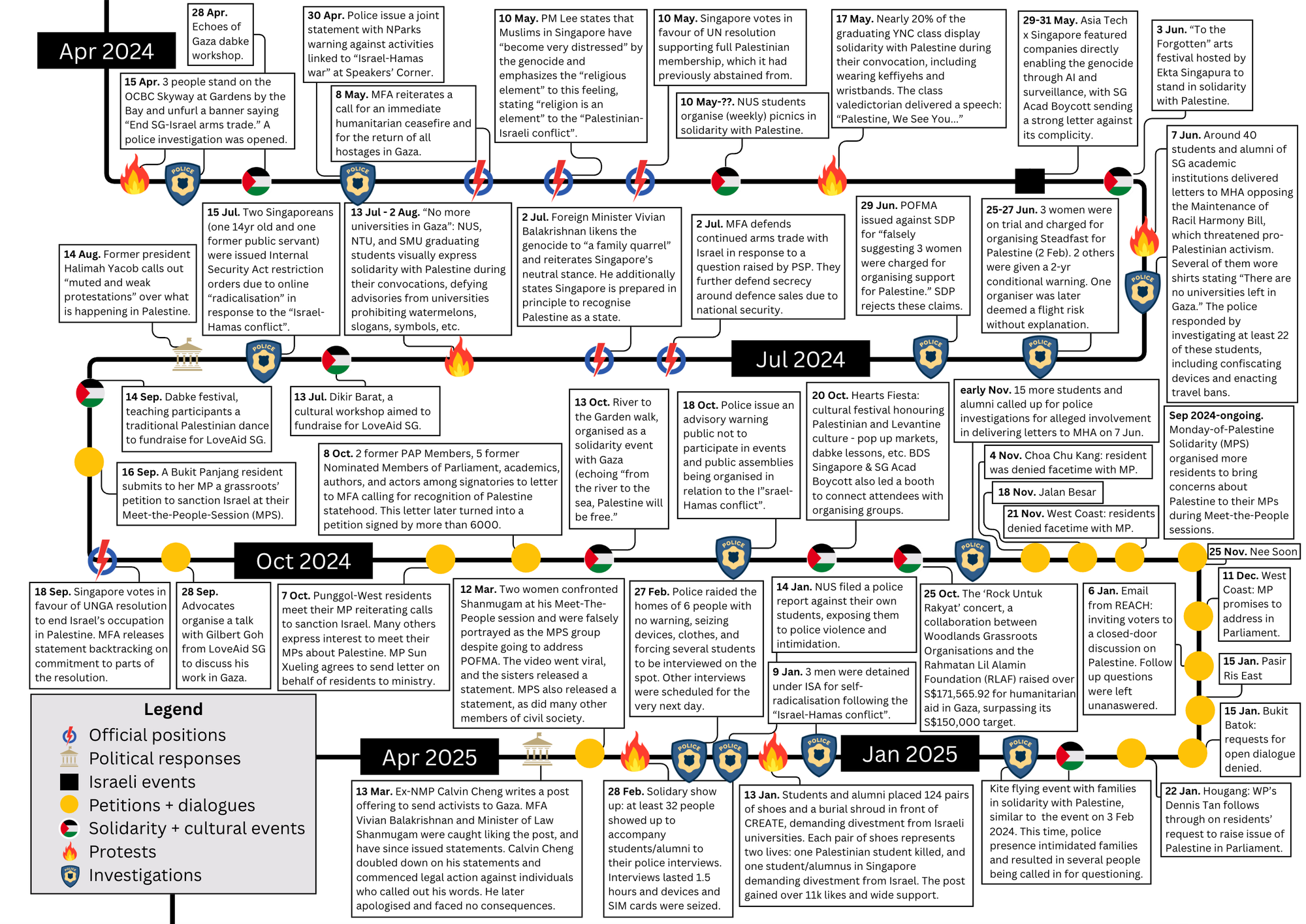
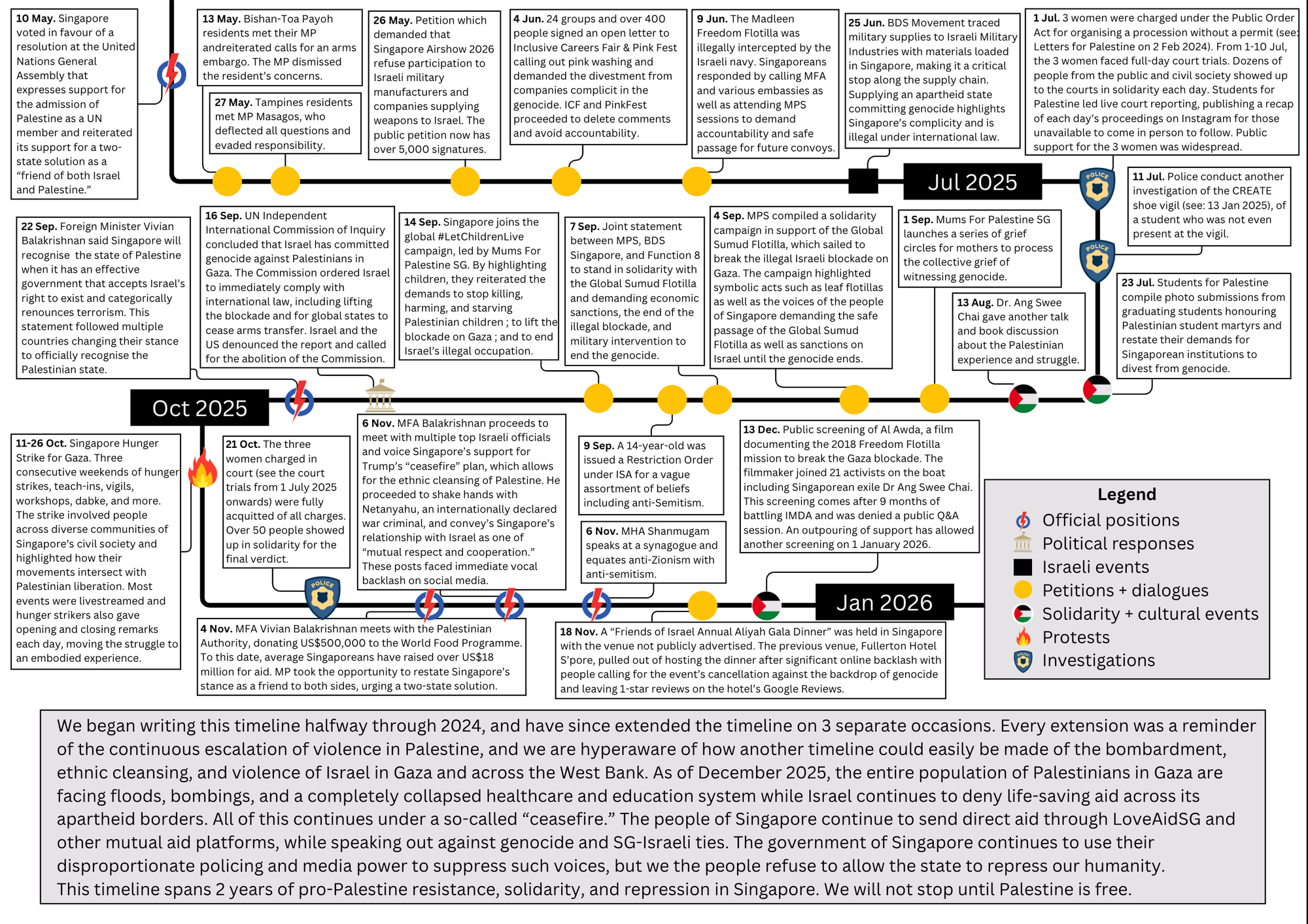
A diagrammatic timeline of Palestine-related developments from October 2023 to January 2026, which was attached as an appendix to TJC's report.
Reprisals have followed hot on the heels of all this mobilisation and organising. Multiple police investigations have been opened, mostly under the stupidly expansive Public Order Act but some also under Sections 298 and 298A of the Penal Code, which have to do with "wounding the racial feelings of any person" and promoting "disharmony or feelings of enmity, hatred or ill will between different racial groups". Many of these investigations have been left dangling, hanging over the heads of those who have been questioned, with no clarity as to what might eventually happen (warning letters? prosecution? no further action?)
 Adilur Rahman Khan, FIDH Secretary-General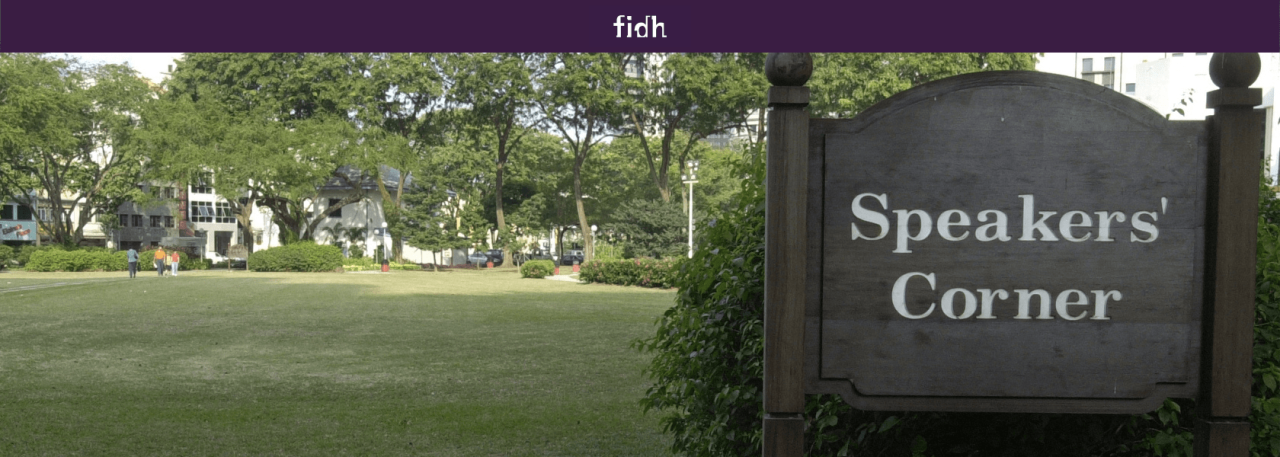
If you want more details on the Public Order Act and why I describe it as "stupidly expansive", read this report.
Unfortunately, the state hasn't been the only one being shitty. TJC interviewed around 20 people for Still Steadfast, and these interviewees talked about being singled out or punished for talking about Palestine at work, having complaints filed against them, losing friendships, and struggling with tensions within their family. Policing and censorship in Singapore doesn't just come from one direction; employers, families, friends, even random members of the public often end up doing the work of surveillance and control for the state.
What's important, though, is that none of this has killed the pro-Palestine movement. Sure, people are afraid, and maybe individuals have had to step back from time to time, but overall the movement isn't in the least bit deterred. Police investigations haven't taught people to be fearful and silent; it's taught people to do risk assessments and pre-action prep and to show up for one another in solidarity outside police stations. Those who can't afford to take the risk right now are also not opting out—instead, there are efforts to find creative ways to circumvent repressive laws and regulations to still engage in discourse and action for Palestine. There are closed chat groups, Telegram and WhatsApp broadcast channels, Instagram pages, a myriad of small- and large-scale ways to reach people.
This is a significant shift from what activism was like about a decade ago. And it's not going to be confined to solidarity for Palestine. While it isn't surprising that people who were already active in civil society have joined the pro-Palestine movement, we're also seeing many Singaporeans for whom Palestine has been a political awakening over the past couple of years. Palestine brought them to political action, and they haven't stopped there. Thinking, reading, learning about Palestine has led people to reflect more on state violence and control in all the ways they manifest, including in Singapore. Also, it's hard not to get a wake-up call about authoritarianism and state over-reach when the police are summoning you for interrogation just because you joined a letter delivery to the Istana or, god forbid, flew kites.
When you read Still Steadfast, keep in mind that all the things the state has done to pro-Palestine activists and organisers can also apply to all sorts of other activism and civil resistance. Similarly, the determination and conviction displayed by those who persist despite such reprisals isn't just confined to the pro-Palestine movement—people spill out of one movement into another, and courage is contagious. And this is, in the long run, good news for Singapore.


Thank you for reading! As always, feel free to forward this weekly wrap to anyone you like, and spread the word about this newsletter!