
I'm in my Reading Era at the moment; specifically, reading on my phone, which is distinct from my Reading Era (on Kobo) and my Reading Era (physical books). Apart from Heated Rivalry I haven't watched any TV shows or films in weeks, but I've been reading thousands of words a day across fiction, nonfiction, and fan fiction. I regret nothing.
(1)
The Workers' Party has indeed told Lawrence Wong to take the Leader of Opposition position and shove it. Okay, they were much more polite than that, but I'd like to think that was the true subtext. From their media statement:
The LO appointment is conventionally extended to the leader of the largest opposition party in Parliament or it is decided by the opposition party in question. To this end, it is important to reiterate that the LO appointment in Parliament arose out of the political success of the opposition at the ballot box. It is the people’s vote that explains the presence of opposition MPs in Parliament. In other Westminster systems, the title of the Leader of the Opposition is established by law and is not the prerogative or choice of the Government of the day or the Prime Minister. This approach expresses the authority and sanctity of the people’s vote.
The Workers’ Party takes the view that the leader of the largest opposition party in Parliament, is the leader of the opposition. As such, the Workers’ Party has conveyed to the Prime Minister that we will not be nominating another Workers’ Party Member of Parliament to the LO post. We continue to focus on our primary duty, to work for Singaporeans and provide a rational, responsible, and respectable check on the Government.
Good for them.
In response, the Prime Minister's Office has said that the LO position will remain vacant. From the PMO's statement:
The leader of the main opposition party in Parliament is indeed the natural choice to serve as Leader of the Opposition (LO).
However, we are in an exceptional situation. Mr Singh has been criminally convicted by the Courts of lying to Parliament, and Parliament has resolved that his conviction and conduct render him unsuitable to continue in the role.
In other jurisdictions, members convicted of crimes involving dishonesty or lying under oath would ordinarily have resigned. This has not happened here.
In Singapore, we place a high premium on honesty and integrity in our political system, and on respect for the rule of law.
I think the People's Action Party have really overdone it here. They dragged this all out way longer than they should have and even though they keep reminding Singaporeans that Pritam Singh has been convicted in court, they aren't looking very good themselves.
(2)
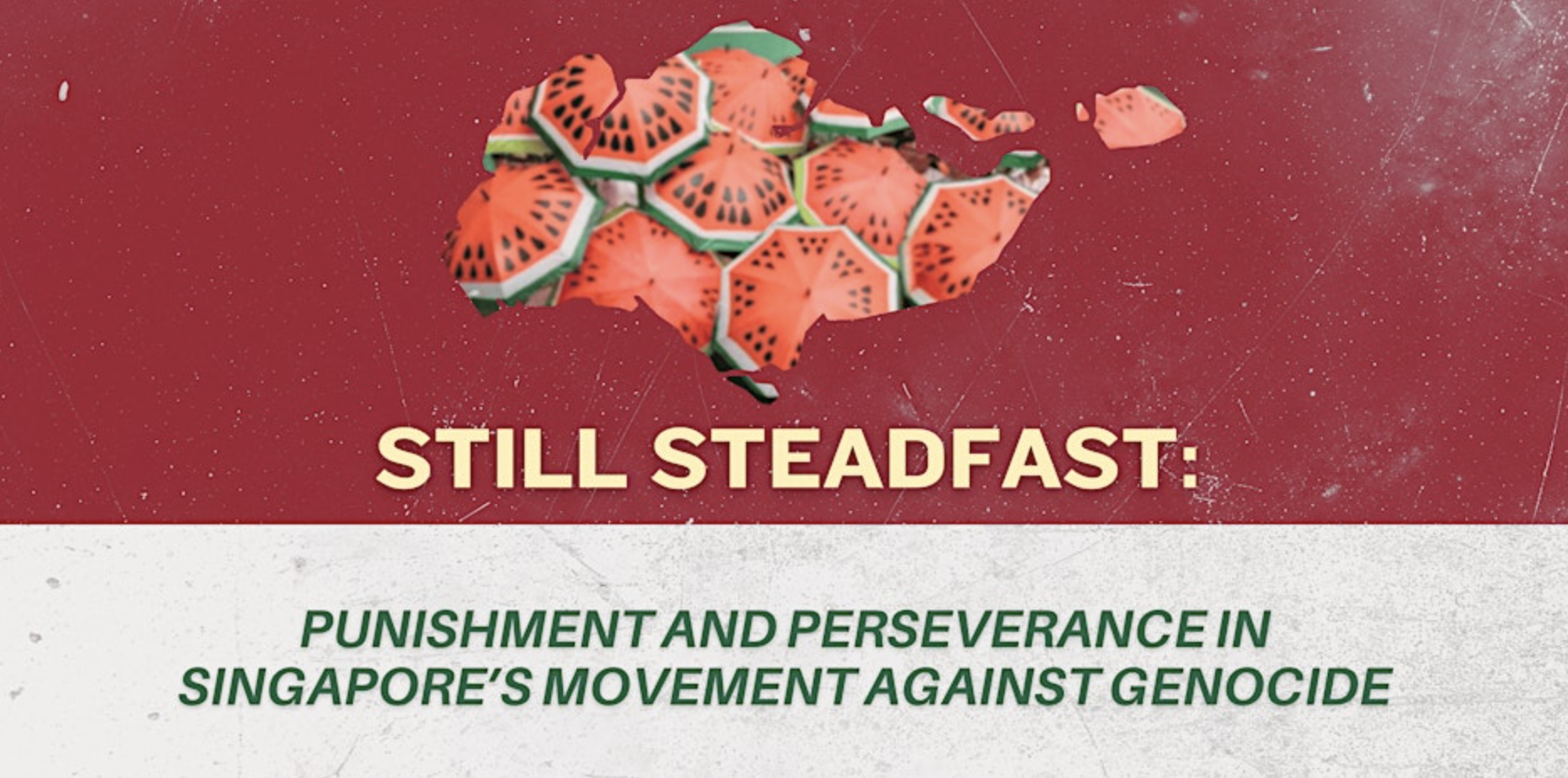
The Transformative Justice Collective is launching a new report. Still Steadfast: Punishment and Perseverance in Singapore's Movement Against Genocide focuses on the pro-Palestine movement in Singapore, and the crackdown that activists, community organisers, and grassroots groups have experienced over the past couple of years.
The launch will be on 2 February from 7pm–9:30pm. There'll be a presentation of the report's main findings, and then time and space for sharing and reflections. Dinner will be provided.
(3)
Budget season is going to be upon us soon again. For those of us who identify as economically and numerically challenged, the Budget debates can feel very mind-boggling, tedious, overwhelming, or all of the above. The key thing to remember is that, while the actual planning and balancing of budgets is a big numbers game, the heart of the Budget is actually about the country's values, priorities, and vision for the future. What we decide are the most important things to invest in and direct resources towards says a lot about who and what we are.
Academia SG has a piece by Linda Lim that can help:
The tight state-economy nexus is particularly visible in land, housing, savings, and capital allocation. Because the government owns nearly all the land and leases public housing on 99-year terms, “market prices” are necessarily shaped by policy. The Central Provident Fund (CPF) holds employees’ mandatory savings (currently amounting to 37 percent of employee compensation) and links a very large share of it to housing purchases and other government-defined uses. The sovereign wealth funds Temasek and GIC intermediate large public assets and maintain strategic holdings in major enterprises, while government-linked companies dominate substantial portions of the corporate landscape. This architecture has delivered order, speed, and scale. It has also raised economy-wide prices, encouraged rent extraction through asset inflation, and tilted returns toward capital and land rather than labor. When the state is everywhere — as de facto landlord, employer, investor, banker, business partner, regulator, customer, supplier, and even competitor in the provision of goods and services beyond public goods — experimentation by private enterprise narrows, not by prohibition but by crowding out, and by the rational impulse to align with official priorities, especially when reliant on the state for incentives or sales.
[...]
Compared to the Nordic European countries, Singapore has a much higher level of income inequality (see Figure 2). Other distributional measures, such as an estimated 0.7 Gini coefficient in terms of wealth inequality, point to the same conclusion. What’s more, these numbers most likely underestimate the actual level of inequality in Singapore. Most OECD countries include all legal immigrants (permanent and temporary residents) when estimating inequality, but Singapore excludes non-permanent immigrants, though they account for 39 percent of the labor force and are concentrated at the lower end of the income distribution. The country’s official measures of inequality (a 2024 Gini coefficient of 0.435 before and 0.364 after taxes and transfers) also exclude non-labor income, more than half the total. The real inequality gap in Singapore, compared with other developed countries, is probably much wider than estimated, while Singaporeans’ share of national income has almost certainly shrunk since 2014, the last time this number was released. Socioeconomic inequality is a direct product of the Singapore model, which generates costs borne by households through higher local-currency prices, crowding out of small and medium enterprises, thin wage growth at the base, and a muted share of national income going to labor and citizens.
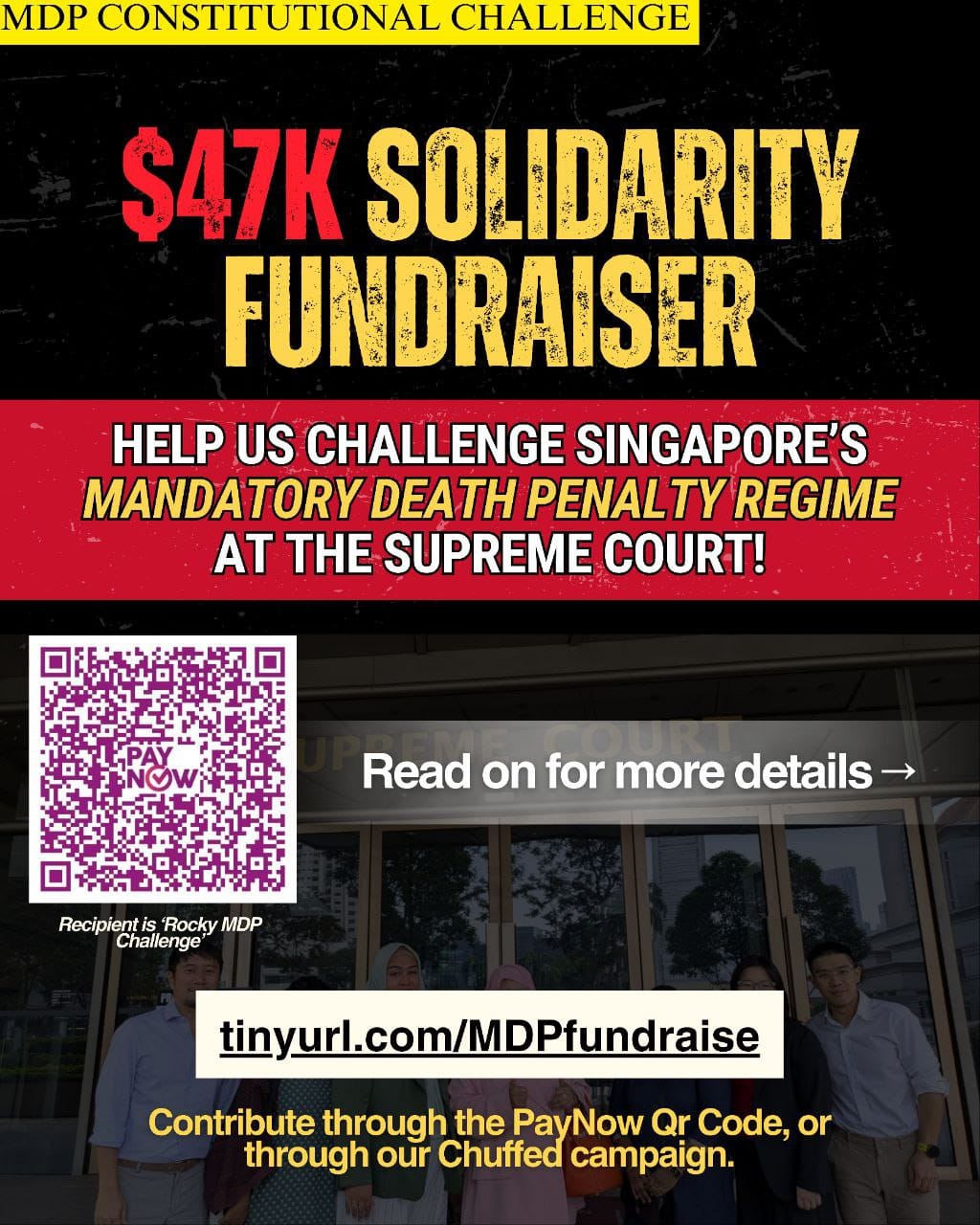
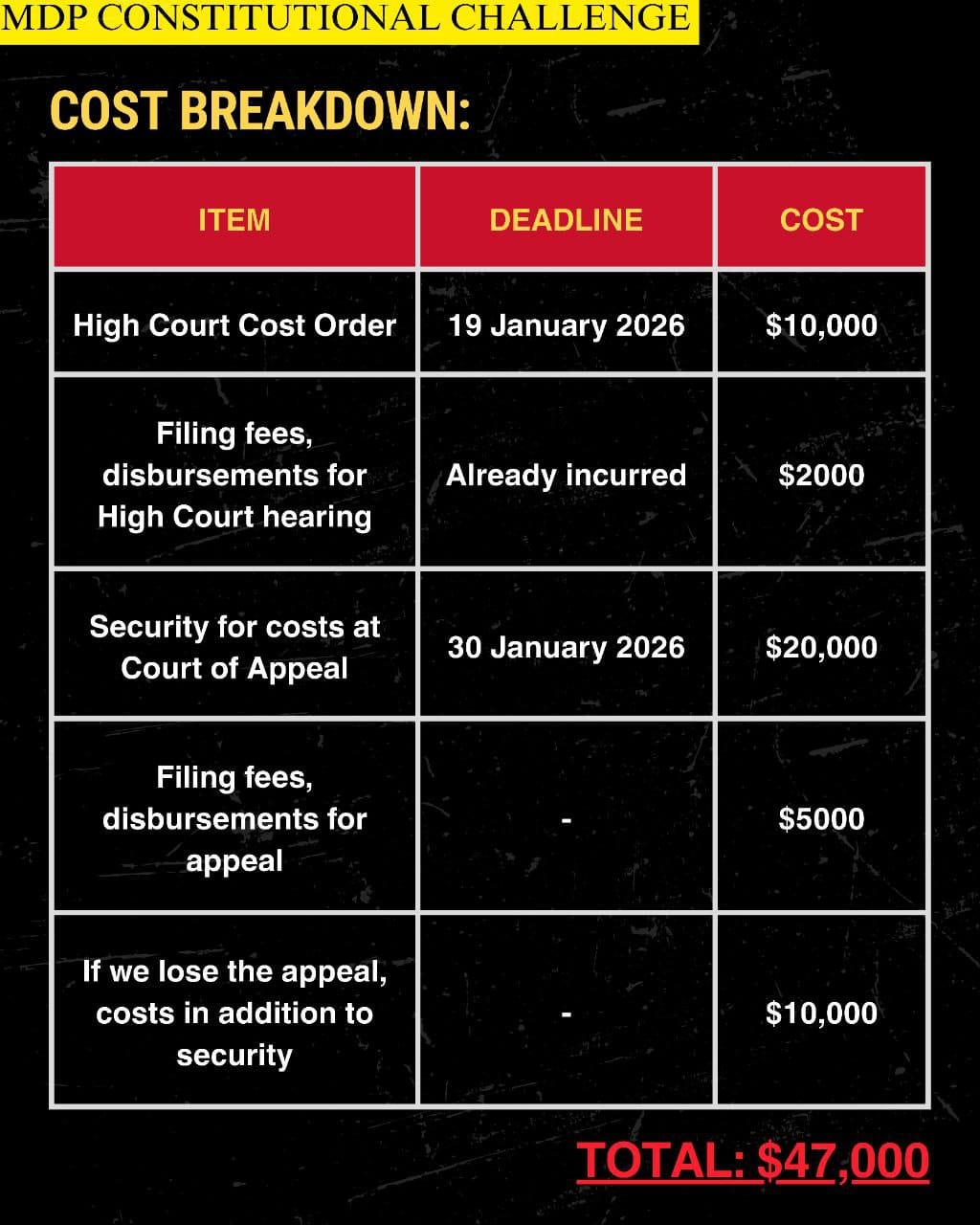
⭐️ [TARGET: $47,000] Help us challenge Singapore’s mandatory death penalty regime at the Supreme Court! ⭐️
On 28 October last year, three sisters of executed death row prisoners, as well as four founding members of the Transformative Justice Collective, filed a constitutional challenge against the mandatory death penalty for drug offences.
The estimated total costs, for the High Court stage as well as the Court of Appeal, is no less than $47,000. These costs do not include any legal fees for lawyers, since the team of applicants are representing themselves.
Please support us by contributing towards the overwhelming costs of this legal challenge, where sisters of executed prisoners and activists have come together to seek justice for the blood spilled in all of our names.
Donate through the Paynow QR code (see image above), or through our Chuffed campaign:
Thank you for reading! As always, feel free to forward this weekly wrap to anyone you like, and spread the word about this newsletter!