
My bookcase collapsed. Honestly, it might have collapsed weeks ago, but I didn't notice because it was stuffed so full that the books were essentially holding up the bookcase instead of the other way 'round. I only realised this week because I thought a stack looked wonky, pulled it out a little to adjust it, and two shelves came down 😅
Because I am an avid practitioner of the art of tsundoku, I haven't read most of the books that now live in stacks on the floor, but I'm going to start sorting through them and accept that I will probably never read some of them. Which is to say, please keep an eye on the book adoption page, because a lot more goodies are probably going up in the coming months. I've already added a few titles a couple of days ago.
(1)
Who gets to participate in the process of deciding what to preserve and what to lose in Singapore? This question is at the heart of issues surrounding development, deforestation, and land use in Singapore. In a guest issue sent out earlier this week, Yong Feng from SG Climate Rally addressed this subject. There'll no doubt be more discussion in Hong Lim Park this weekend at the Maju For The People rally.
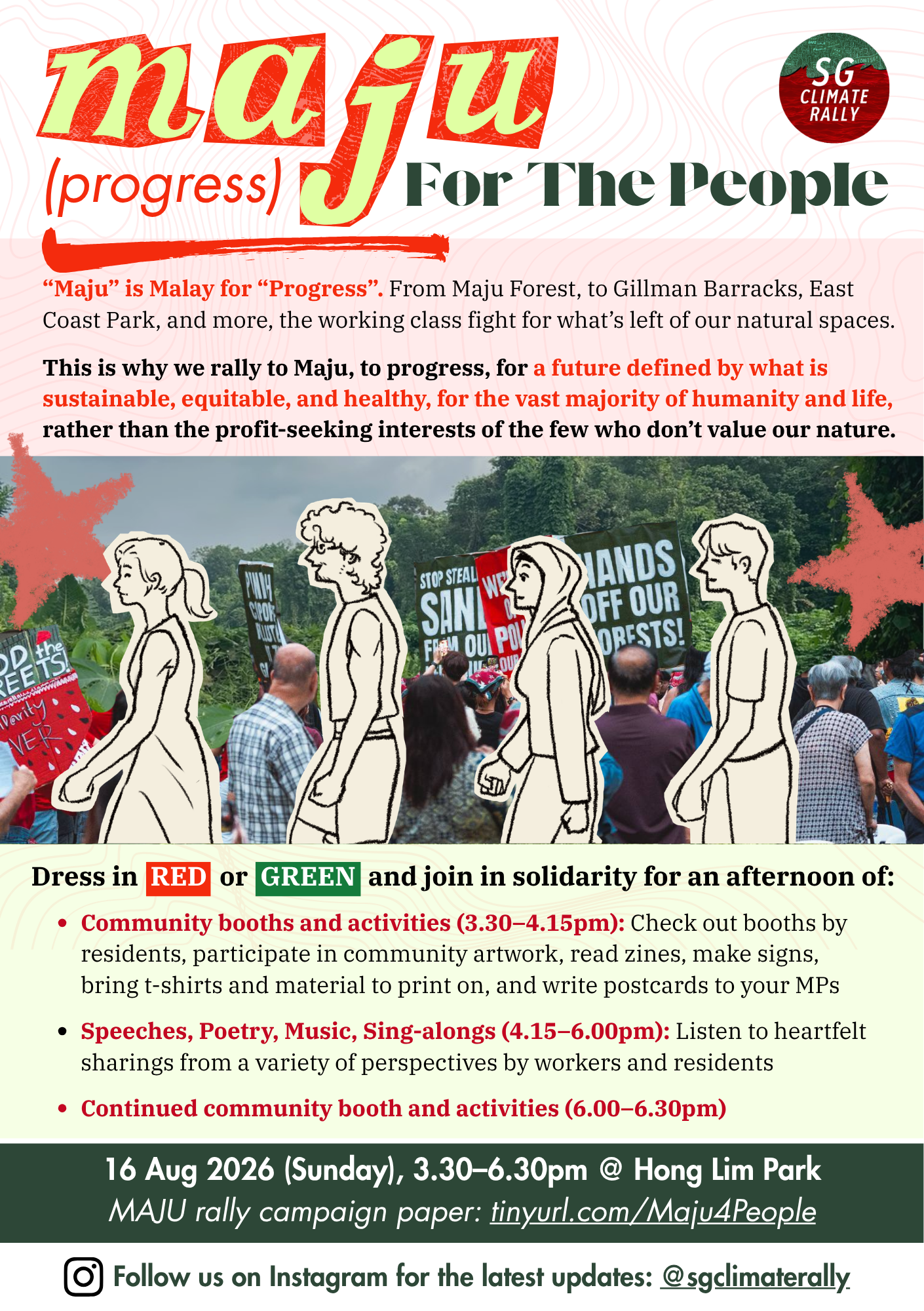
Ahead of this weekend's rally, the government has said that they've heard the public feedback and that they'll be keeping more greenery at Sunset Way and Gillman Barracks. But that means there'll be fewer homes for people, Alvin Tan, the Minister of State for National Development, says.
It's really irksome messaging, like "yeah yeah we heard you okay we'll give you what you want but see what you did?" And this is exactly the issue: are there really only these two options, or are there alternatives that can be considered? What might come out of genuine consultation, where people are able to actually participate in determining what we care about, what we want to save?
(2)
Singapore's love affair with AI continues. Earlier this year, OpenAI announced a partnership with the Singapore government in support of Singapore's National AI strategy. Now, we've got the National University of Singapore jumping on the bandwagon with the company. According to Aaron Thean, NUS's provost and deputy president for academic affairs, the partnership with OpenAI was a "significant but necessary" investment. This gets everyone at NUS access to ChatGPT Edu, with other advanced tools tried out in certain courses. All incoming freshmen will also be required to complete an AI course—called "Applied Generative AI: From Prompting to Evaluation"—within the first two weeks of their semester. This is only the beginning, Thean says. OpenAI isn't the only company that wants to work with NUS and its "captive market".
I get universities wanting their students to have "AI fluency" by the time they graduate. It's the sort of thing that employers expect, especially if you work in fields like tech. But it troubles me that this wholehearted embrace of AI in Singapore—to the point of premiering AI-generated films—isn't adequately accompanied by open, deep conversations about the ethics, limitations, and pitfalls of generative AI. I know it's naive to expect that we can shove AI back into a box and throw it away, to boycott it and pretend it doesn't exist, but we need to be clear about the costs of the technology, about what we're sacrificing and destroying, and ask ourselves if it's worth it. I also worry about people who grow far too reliant on AI, to the point that it undermines the ability to think, deal with complexity, or recognise that sometimes the process is what's important.
(3)
Singapore's ageing population is also reflected in our prison system. CNA reports that in 2025, one in six people in prison was 60 or older. Just like older people outside, the elderly who are incarcerated have to deal with a variety of medical conditions or grapple with dementia. CNA's article covers not only the ways the prison has adjusted to cope with an ageing incarcerated population, but also the challenges that older people face when they're released.
But are prisons inevitable? What does it say about our society if older people are ending up behind bars? If they're so-called repeat offenders who've been in and out and in and out of prisons most of their adult lives, what does that tell us about the effectiveness of prisons? If it's their first time in prison, what does it say that older people are ending up in conflict with the law? What else can we be doing to address the reasons that people end up on the wrong side of the law and end up locked up?
Got some more...
🫥 Drama at the Law Society! Members got heated while arguing over whether the full findings of an investigation into workplace bullying and poor work culture should be released. More than a hundred members had signed a petition in favour of releasing the full report. Edwin Tong, the law minister, supports releasing the whole thing, too.
😒 Pritam Singh of the Workers' Party has been struck off the roll of advocates and solicitors—the latest, and hopefully last, installment of the saga that began with Raeesah Khan trying to not out herself as having been a survivor of sexual assault.
Thank you for reading this issue! If you'd like to support We, The Citizens, please consider becoming a Milo Peng Funder by getting a paid subscription. You can also gift someone else a subscription, or leave a tip (in SGD).
If you're not ready for a paid subscription, you can still support the newsletter by sharing it online and helping me get the word out!
Music for the weekend! I'd originally chosen this earworm for last week, then decided to go with an NDP-themed one.