
I don't like this. I am not a fan of how quickly time is passing. We're almost in APRIL, wtf?!
(1)
If you subscribe to/buy The Straits Times, you might have seen the "Correction Notice" that Terry Xu, the editor of The Online Citizen, was forced to put in the paper on 26 March. The Protection from Online Falsehoods and Manipulation Act—the famous, embarrassing, and famously embarrassing POFMA—allows the government to force the target of a POFMA direction "to publish the correction notice in the specified manner in a specified newspaper or other printed publication of Singapore".
This was invoked for the first time earlier this week, requiring Terry to buy ad space from The Straits Times to publish the "Correction Notice" that the authorities had helpfully put together for him. The cost of ad space came up to $10,400. The day the ad appeared in the paper, Terry and TOC was hit by yet another POFMA direction—once again requiring him to publish another POFMA direction in The Straits Times, which means having to pay another $10,400. (On top of that, the police are now also investigating TOC.)
Every time a POFMA direction comes out, there's an urge to get into the weeds right away, to scrutinise every word that the government claims forms the "false statement of fact", to figure out if it's really 'fake' or if this is a case of splitting hairs or quarrelling over interpretation and framing. It's understandable, since POFMA is positioned as being about 'facts' and 'truth'. Criticising a POFMA direction without first determining whether the subject statements were true/accurate can easily be twisted to look like being "anti-government" for the sake of it and not caring about fighting misinformation.
But all this zooming in and quibbling over intention, wording, characterisation can also make us miss the woods for the trees. It's already one thing to have a law where the government can force you to humiliate and shame yourself by publishing "corrections" that have been drafted for you, even though that same government has a huge amount of power and resources and access to mass media and widely followed social media platforms to publish their corrections or rebuttals even without the use of POFMA. It's a whole other thing for the government to force you to publish its messages in the media at your own expense, to the tune of thousands of dollars. Failure to comply with a POFMA direction is a criminal offence, so no matter how much the ad space costs, there's no option to refuse to cough up the money and get the notice published (unless you're willing to face a fine of up to $20,000 and a jail term of up to 12 months).
This is a huge burden—and punishment!—that's been imposed on TOC. And the law allows for it to be imposed on anyone else, should the government want to do so. Compliance is required even if you want to challenge the order, so that would require buying the ad space first, then spending even more money on appealing the POFMA direction in the courts. Most people and organisations don't have that kind of resources.
And let's not forget this very important thing: it's not even clear that these orders work to combat the harmful hostile information operations that the government said POFMA was meant to protect Singapore from. Coordinated disinformation campaigns, potentially sponsored by foreign states and/or run by shadowy figures with lots of money to engage in Cambridge Analytica-style manipulation, don't give a shit about "Correction Notices". They won't be the ones paying for newspaper ads, because it's not like Singapore can arrest those foreign actors or impose the costs that they're able to impose on local civil society organisations, independent media outlets, opposition parties, or individuals. There are plenty of conspiracy theories and dodgy narratives going around social media and the chat apps about Russia's invasion of Ukraine, about China and its treatment of ethnic minorities, about Israel and Palestine and the US—all of which POFMA's correction notices can't do very much about. So what is POFMA being used for, really?
(2)
Singapore has denied entry to a Malaysian lawyer and activist. Fadiah Nadwa Fikri had completed a PhD at the National University of Singapore just this January, and had planned to enter Singapore this month to give a guest lecture on her thesis and meet up with some friends. She was told at the border that she's "ineligible for the issue of a pass under current immigration policies". The Ministry of Home Affairs has branded Fadiah an "undesirable visitor", claiming that she had encouraged young Singaporeans to "go beyond protests, to mobilise students and different communities in Singapore, and to undertake disruptive and violent actions to support specific causes". It's not clear what, exactly, this means—what did she actually say, to who and when? Where is the evidence?—and Fadiah has blasted MHA's statement as "false" and "malicious".
(3)
Conditional warnings have been dished out to people for walking to deliver letters to the Ministry of Home Affairs. The police say that they've issued 12-month conditional warnings to 11 people for their participation in the letter delivery action that I wrote about in WTC's 8 June 2024 newsletter:
 Kirsten Han
Seven others are still under investigation because they've been involved in other cases. I was questioned for this letter delivery action to MHA, too, but it wasn't clear to me whether I was being questioned as an accused person or a witness, so I'm not sure what's going on in my case. I haven't heard from the cops, but I've also been out of Singapore, so 🤷🏻♀️🤷🏻♀️🤷🏻♀️
In any case, it was ridiculous that this peaceful action even warranted investigations, much less conditional warnings that are barely worth the paper they're printed on.
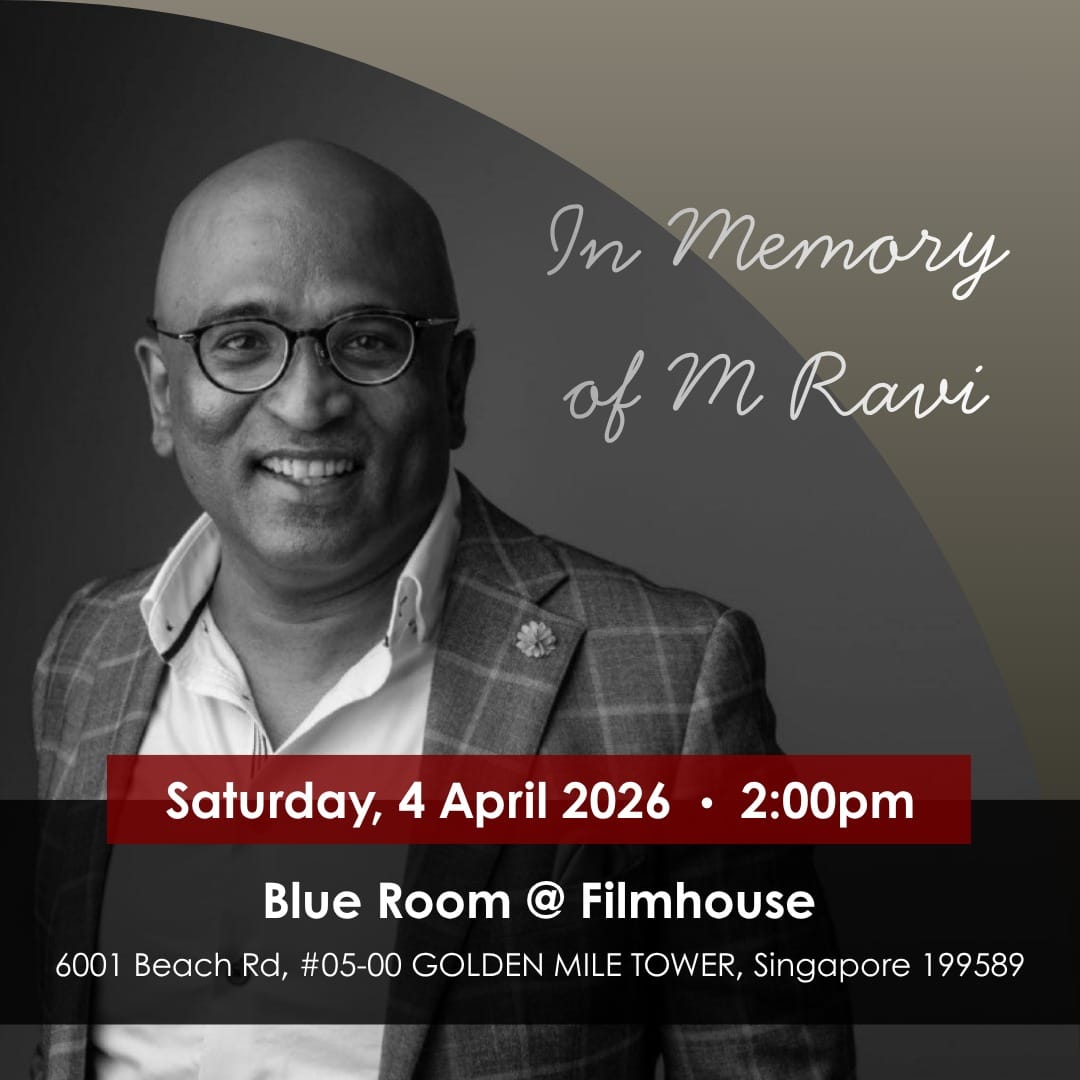
In memory of M Ravi
It'll soon be 100 days since M Ravi died on Christmas Eve last year. Some of us have got together to organise a memorial for him to remember the contributions he made to civil society and the friend he was to so many. Come join us on 4 April at 2pm, at the Blue Room @ Filmhouse. We also have an online memorial page, if you'd like to leave a message or share photos and memories.
Thank you for reading! As always, feel free to forward this weekly wrap to anyone you think might be interested, share the web link on social media, or spread the word about this newsletter!